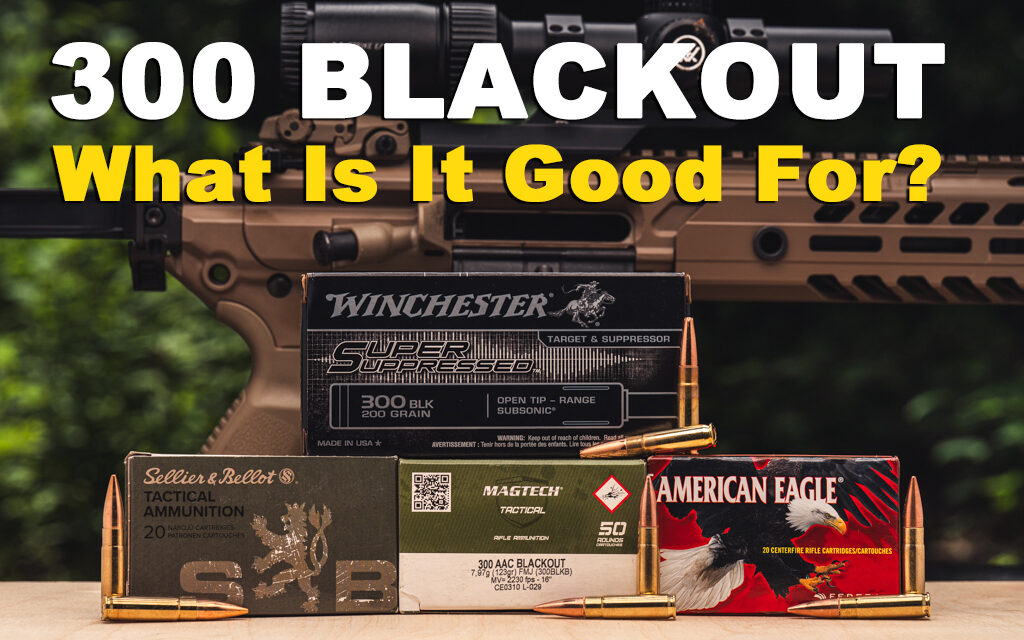
When the .300 BLK hit the market in the early 2010s, it was initially marketed as a replacement for SOCOM’s 9mm MP5 submachine guns. With it, we could shoot subsonic 7.62mm rounds out of a traditional AR15 platform with nothing more than a barrel change. After all, the 5.56 delivered a 60+ year history of warfare, hunting and other uses. Simply stated, it was the standard. Did we even need the 300 Blackout?
What all is .300 BLK good for? Is it just something to suppress, or does it have more utility that would make sense for the average gun owner to keep in their safe?
Supersonic Capabilities – Better than 5.56?
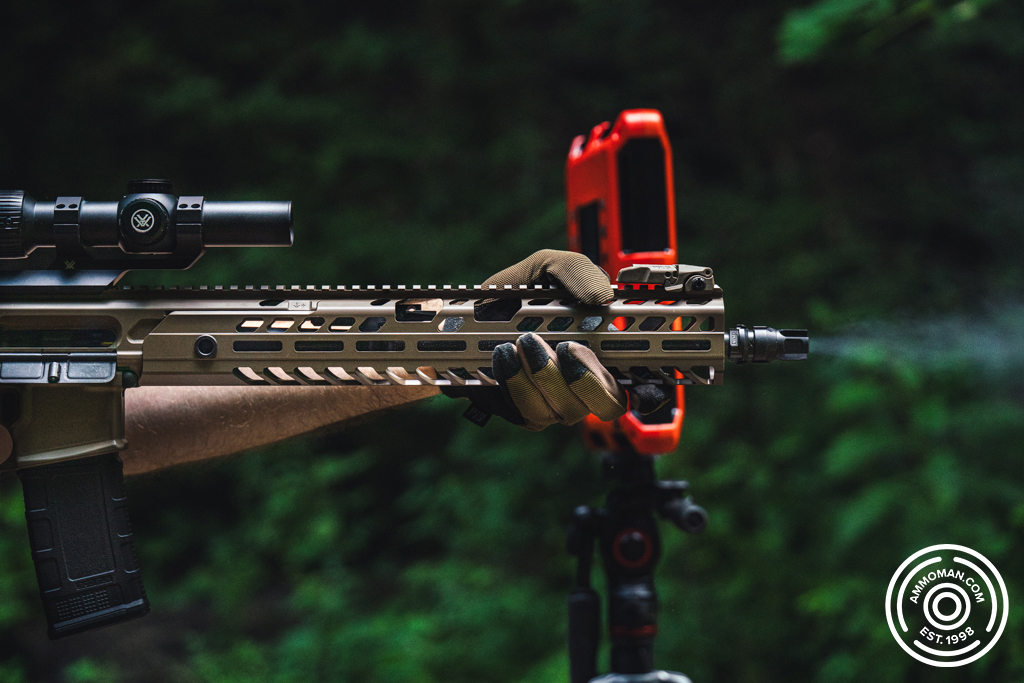
With .300 BLK being known as the “quiet round” the supersonic capabilities generally get overlooked. For those that are unaware of the difference, subsonic = slow + heavy to keep it under the speed of sound. This removes the “crack” you hear when the slug is flying downrange. Supersonic is lighter and faster, which leads to better performance at distance.
While .300 BLK subsonic ammo is awesome to keep around. It often ends up being about the same as 45 ACP performance wise. They’re 190-220gr generally, vs supersonics which are generally between 110-150gr. For my testing, I was using 125 grain supers.
Ballistics wise, the 125gr round carries energy and penetration better than 5.56 out to about 500 yards.
Here’s a chart comparing a 9” .300blk with 125gr to a 14.5” 5.56 with 62gr based off of the general velocities and ballistic coefficients of most popular manufacturer’s data.
| Range (yd) | .300 Blk Velocity (fps) | .300 Blk Energy (ft-lbs) | 5.56 Velocity (fps) | 5.56 Energy (ft-lbs) |
|---|---|---|---|---|
| 0 | 2200 | 1343 | 2900 | 1157 |
| 50 | 1801 | 900 | 2380 | 780 |
| 100 | 1475 | 604 | 1954 | 525 |
| 150 | 1207 | 405 | 1604 | 354 |
| 200 | 989 | 281 | 1316 | 238 |
| 250 | 809 | 182 | 1081 | 160 |
| 300 | 662 | 122 | 887 | 108 |
| 350 | 543 | 82 | 728 | 73 |
| 400 | 444 | 55 | 598 | 49 |
| 450 | 363 | 37 | 490 | 33 |
| 500 | 298 | 25 | 402 | 22 |
In the Marine Corps, we shoot our 14.5” M4s and 16” M27s out to 500yd for our standard qualification and as we can see, a 9” .300 BLK outperforms a 14.5” M4 out to 500yd. A 16” barrel velocity and energy wise is close to identical to a 14.5, so I didn’t feel it was important to include in the chart.
One Platform, Multiple Hats
The .300Blk round was designed around a 9” barrel. This means that you get full powder burn at 9” of barrel. This lends to almost total flash mitigation at 9” with a standard flash hider or suppressor. When we look at a weight difference, a common 9” .300blk barrel is ~1.2 to 1.4 lbs versus a SOCOM profile 14.5” 5.56 barrel at ~2.0-2.3 lbs. This shaves almost an entire pound off of the front end. Experienced shooters know lighter firearms make for a handier overall platform for carrying through the thick woods.
This mixed with a law found in a handful of states requiring cartridges .224 or greater for hunting, as well as the moralistic side of hunting, makes .300blk a much better round for hunting anything from varmints and hogs to deer. For night hunting of coyotes and hogs, the lack of flash from the short barrel lends to a more pleasant experience.
Go Subsonic With Ease
Since .300 BLK can seamlessly transition between supersonic and subsonic without changing your gas or buffer settings, this makes it great for home defense as well. Subsonic cartridges will be less likely to over-penetrate exterior block walls. If suppressed, it won’t be detrimental to the hearing of you or your loved ones in the home.
The shorter overall length, especially if in a platform like a Sig MCX with a folding stock, also brings out one of the other key reasons why the .300blk was adopted by SOCOM. It’s a great personal defense weapon (PDW). This means that stowing in a low profile bag in a vehicle is easy (with all state laws regarding this observed).
This puts a standard .300 BLK as a great platform to fulfill:
-
- The standard carbine every American should own
- Hunting rifle for varmints – deer with standard loadings
- Home defense
- Personal defense weapon
.300 blackout costs slightly more per round than 5.56, it can be hard to justify until you look at the multitude of hats that .300 BLK can fulfill. It gets even cheaper when reloading as well, which can also give you even more capabilities with the platform. If you have a large bore .30 cal platform like a .308, .300wm, or even .30-30, you can share projectiles while reloading which will cost less overall to keep both a carbine and long range large bore platform well fed.
Why Would a .300 Blackout Be Good For You?
While the 5.56 is still the default for what most citizens purchase a carbine in, a .300 BLK upper (or entire additional rifle) is a great way to get a more general purpose setup. A small bag gun to something you can take through the bush to kill a deer, and have next to your bedside when not in a bag or in the hunt is almost too perfect of a solution, but thankfully the .300 BLK exists.
The .300 BLK isn’t just a niche round for close quarters suppressed use, it’s a versatile solution for almost anything you can throw at it. While ammo cost can be higher than 5.56, . In upcoming articles, we’ll dive into ammo selection and optimizing your setup for specific applications. If you’re looking for a single rifle that wears multiple hats, .300 BLK deserves a spot in your safe.