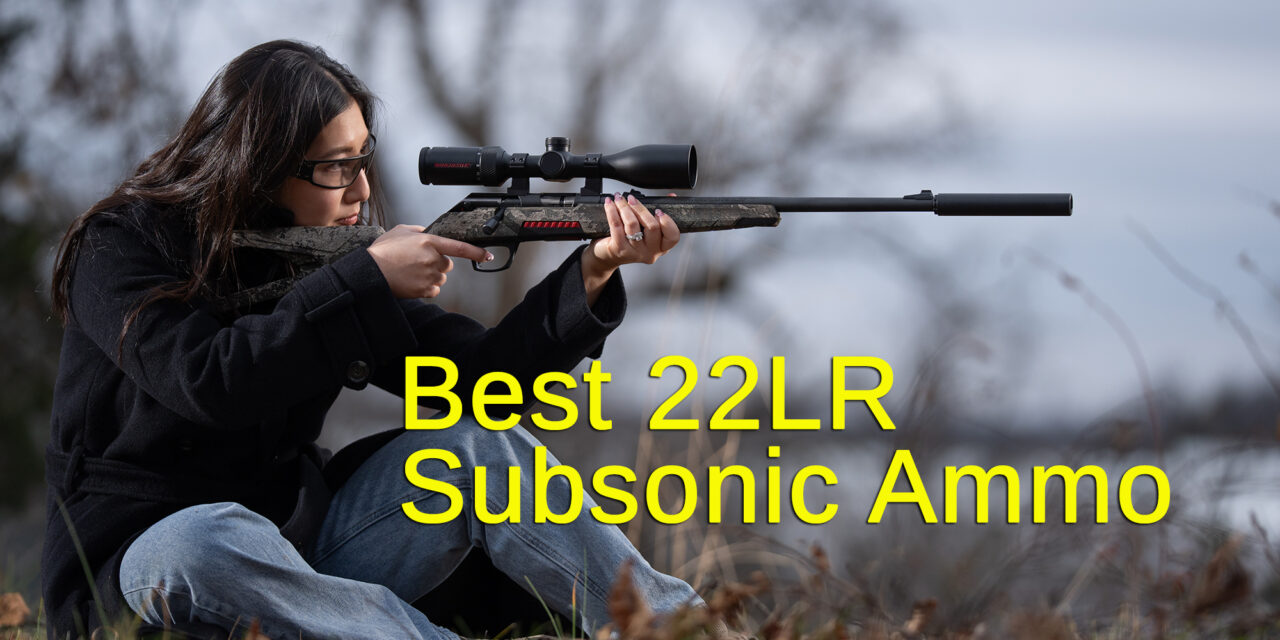
Subsonic 22LR ammunition is designed mainly to reduce the sound signature of the bullet.
The report is handled by the sound suppressor or, in its absence, by the increased barrel length. A standard velocity or subsonic cartridge fired through older rifles with 22″ to 28″ barrels produce far less noise than high velocity cartridges do with today’s 16″ carbines. That’s because the exit pressure is so much lower: the difference can reach 20 decibels! With supersonic bullets, the projectile itself creates a shockwave that propagates as a cone with the wide end towards the shooter. While the bystanders get the worst of it, the shooter still gets to suffer the noise reflected from nearby objects. This is especially annoying indoors. With pistols, many even nominally supersonic cartridges produce only subsonic velocities. So, the muzzle blast made worse by the high exit pressure of the short barrel becomes the greatest offender to your hearing. Hypervelocity cartridges, like CCI Stinger, retain the supersonic “crack” even from pistol barrels.
One load, CCI Quiet, is loaded to such low velocity that it becomes ear-safe in longer barrels. For short range against paper targets, where striking power and flatness of trajectory aren’t critical, 700fps of the Quiet load provides an excellent training option. They can also be used for harvesting small game, either as ball cartridges or with pre-fragmented bullets.
However, for the most effective use, CCI, Federal, and Winchester 45gr subsonic loads provide maximum energy possible within the velocity limitation.
Best 22LR Subsonic Ammo Picks
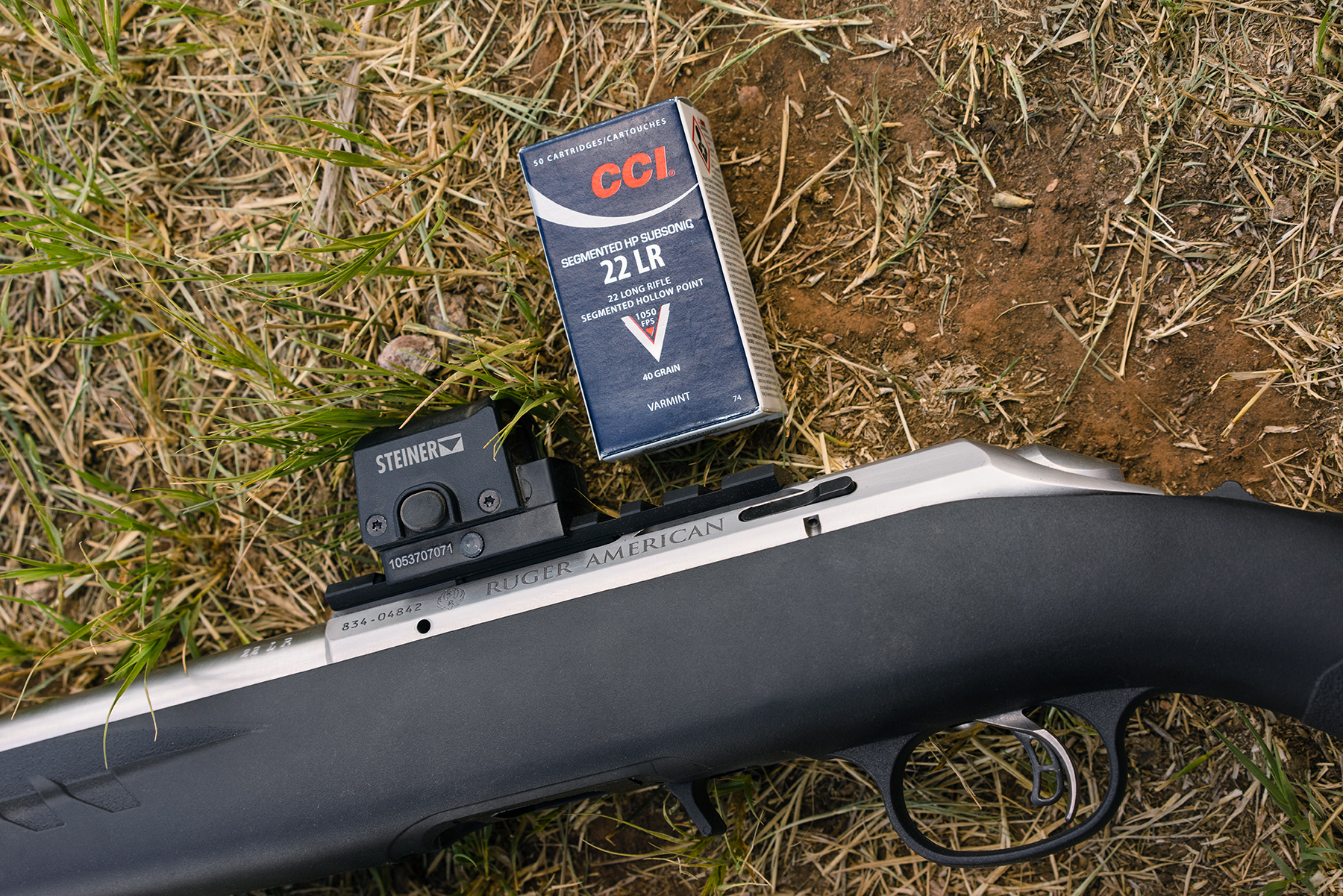
1.) CCI Suppressor 45 Grain LHP Ammo
You’ll get 970 feet per second out of the barrel and reliable cycling from most semi-automatics with CCI’s 45 Grain 22LR load. That combo, and our frustration-free range experience with it, makes it our top pick for suppressed rimfire shooting.
You might also check out CCI’s clean 22 Suppressor loads. This ammo features a polymer coated LRN bullet. It produces less bore fouling and promises to cut your suppressor fouling in half over a traditional lead round. 45 Grain
2.) Federal American Eagle 45 Grain Copper Plated Round Nose
Another load with 970 feet per second of muzzle velocity. These copper plated round nose bullets promise reliable feeding and accuracy. This is another great option for 22LR subsonic ammo. CCI makes this one especially for shooters with suppressors.
3.) Winchester Super Suppressed 22LR 45 Grain Ammo
This round delivers a slightly higher muzzle velocity of 1090 feet per second but it’s still subsonic. Plus, Winchester makes their 45 grain Super Suppressed load especially for use with suppressors. This ammo also features a low-flash propellant, which is ideal for low-light situations.
What Makes These Rounds Good Options?
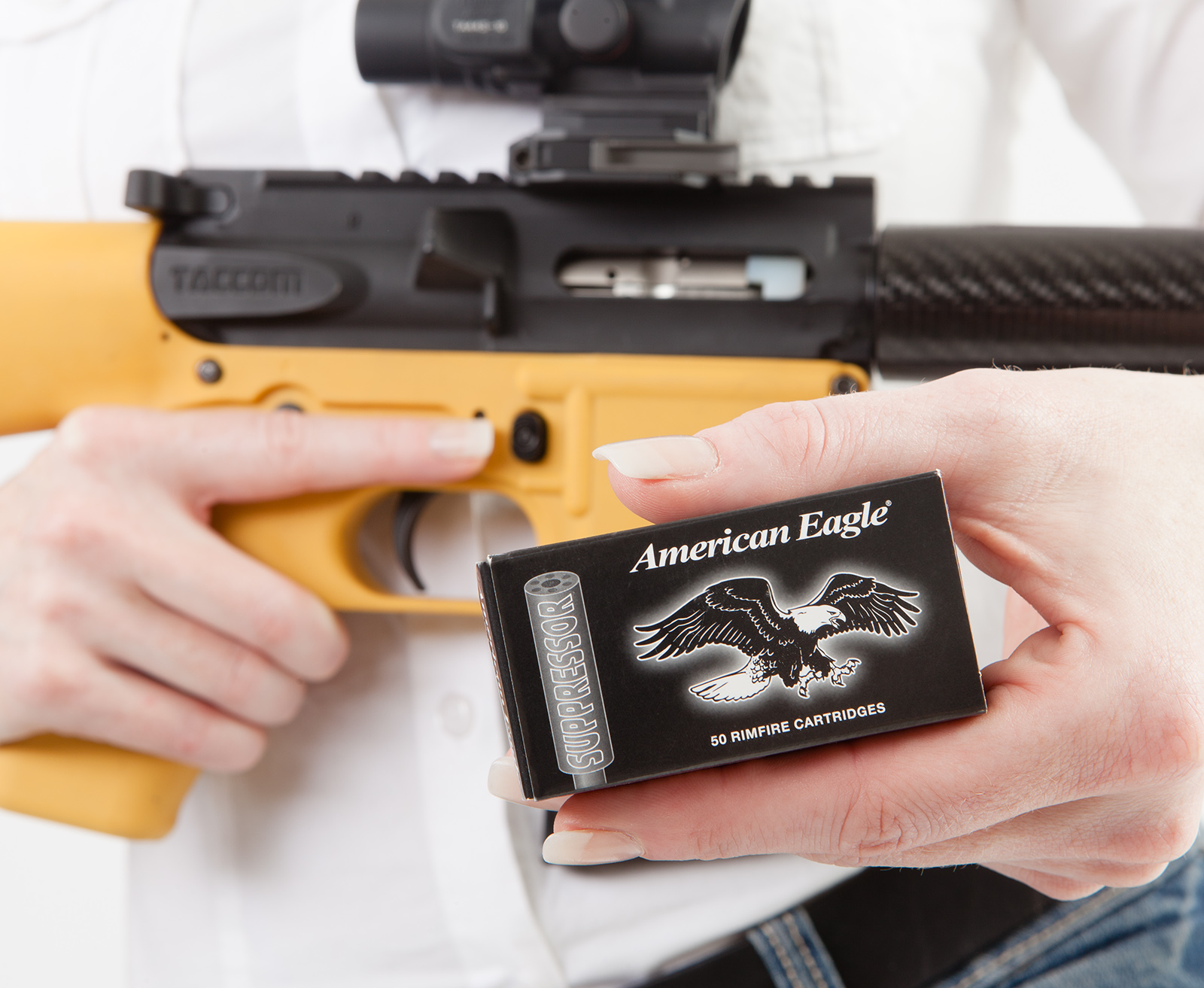
Lower impact velocity, slightly under 1000fps, especially with round nose bullets, provides maximum straight-line penetration. They suppress well due to the absence of the supersonic crack. Plated bullets fire well in semi autos, but Winchester loads require a stronger firing pin impact for reliable ignition than CCI and Federal.
Accuracy has been excellent in all three, in part thanks to the longer bearing surface of the bullets. That same quality improves their accuracy in rifles with special 1:9 twist barrels designed from the start for sound suppressed use. Bore Buddy AR15 uppers are the prime example of that: they work well with all 45gr subsonics, and with rare Piney Mountain 50gr loads. While you can use 850 feet per second 60gr Aguila SSS (Sniper Subsonic) as well, short cases cause gas escape from the ejection port early in the cycle while the pressure is still high, creating noise. You’re best to use Aguila SSS in manually operated actions with fast twist barrels: 1 in 9 inches works well, while 1 in 12 inches is likely to produce destabilized bullets.
What About “Normal” 22LR Ammo?
Common 38 to 42 grain subsonic rounds from various makers usually cycle semi auto actions with the help of additional back pressure created by sound suppressors. CCI, Federal, Aguila, and Eley all offer very accurate, reliable loads in the 1050-1070fps range. Their energy is reduced slightly compared to high velocity of the same weight, but they created drastically reduced sound signatures. Even with hollow points, bullet expansion isn’t likely, except with the CCI pre-fragmented load. However, hollow point bullets have a slight edge in accuracy due to higher rotational stability.
Standard velocity 22LR ammunition, again offered by all major manufacturers, split the difference in speed. I had once fired nearly 2,500 rounds of Aguila subsonic match 40gr standard velocity cartridges through a suppressed Smith & Wesson M&P15-22 before having to clean the gunked-up rifle. While subsonics would have been fractionally quieter, the greater recoil energy of the standard velocity cartridges helped cycle it consistently. Although loaded to just about the speed of sound, standard velocity cartridges do not produce a shockwave in flight.
While accuracy of .22 loads is hard to predict, all of these are quite capable of excellent performance. Matching up your specific firearms to the most fitting ammunition is a matter of buying a 50rd box of each possible type, firing test groups from support through the exact sound suppressor you intend to use. Some suppressors alter groups for better or worse, some leave them unaffected.